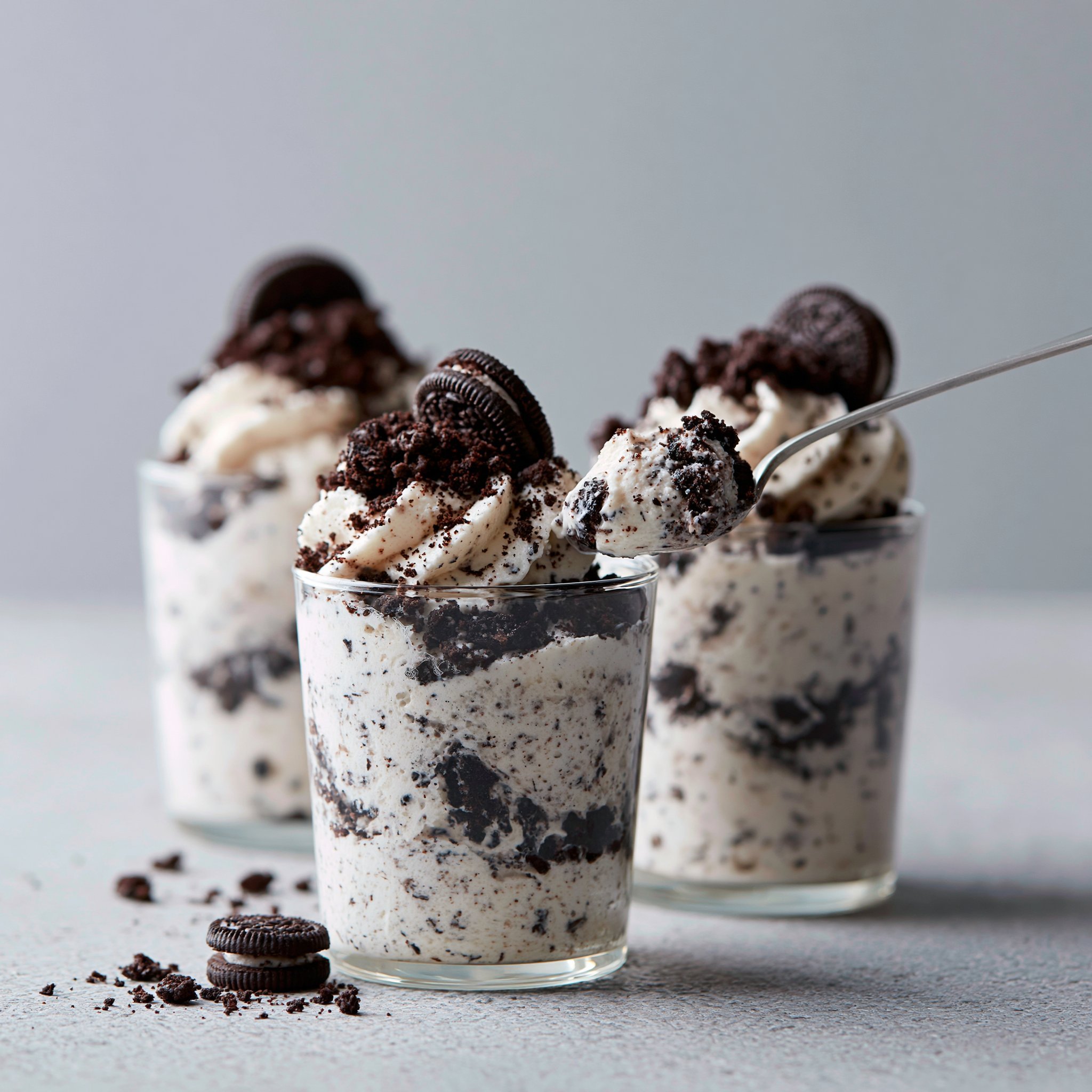
Silky, Oreo-speckled mousse is one of those desserts that looks like you fussed—even though it’s mostly whipping, folding, and letting the fridge do the work. You get a creamy vanilla-cream cheese base with crunchy-cookie bits tucked throughout, so every spoonful hits that cookies-and-cream sweet spot.
I like serving it in small cups because the layers of pale mousse and dark crumbs look naturally dramatic. If you’re curious about who’s testing and writing these recipes, you can read a little more on the about Citrus and Crave page.
Why You’ll Love This Recipe
- The texture is the best part: airy whipped cream folded into a smooth cream cheese base, with Oreo crumbs for contrast.
- No baking, no stovetop—just a mixer, a bowl, and a couple hours to chill.
- It sets up into a scoopable, spoon-coating mousse (not runny, not stiff) after chilling.
- The vanilla lifts the “cookies and cream” flavor so it tastes rounder, not just sweet.
- Easy to portion: individual cups keep it neat and make serving feel special with almost zero effort.
The Story Behind This Recipe
This is my go-to when I want a dessert that feels classic and cozy but still looks polished—crushed Oreos do all the visual heavy lifting, and the cream cheese gives the mousse enough body that it holds those cookie bits instead of letting them sink and disappear.
What It Tastes Like
It’s sweet and creamy with a clear Oreo-chocolate aroma the moment you fold in the crumbs. The mousse itself tastes like vanilla cheesecake-meets-whipped cream—rich but light—while the cookie pieces add little pops of cocoa crunch that soften slightly as it chills.
Ingredients You’ll Need
A full package of Oreos gives you plenty of crumbs and little chunks (those small pieces are what make the texture fun). Heavy cream is what turns the filling airy, while cream cheese makes the mousse thicker and more stable. Powdered sugar dissolves smoothly—no grit—and vanilla keeps the flavor tasting “cookies and cream” instead of just sugary.
- 1 package of Oreo cookies
- 2 cups of heavy cream
- 1 cup of powdered sugar
- 1 teaspoon of vanilla extract
- 8 ounces of cream cheese, softened
How to Make Oreo Mousse
- Crush the Oreos. Use a food processor for quick, even crumbs, or put the cookies in a sturdy plastic bag and crush with a rolling pin. Aim for mostly fine crumbs with a few small chunks—those pieces give you the best bite.
- Beat the cream cheese base until smooth. In a large mixing bowl, beat the softened cream cheese with the powdered sugar and vanilla extract. Keep going until it looks creamy and lump-free, scraping the bowl as needed. (If your cream cheese is too cold, you’ll feel little bumps that won’t fully smooth out.)
- Whip the cream to soft peaks. In a separate bowl, whip the heavy cream until it forms soft peaks. You’re looking for a thick, billowy texture that holds a gentle curve when you lift the whisk—not stiff and clumpy.
- Fold to keep it airy. Add the whipped cream to the cream cheese mixture and gently fold until you don’t see big white streaks. Take your time—folding (instead of mixing hard) keeps the mousse light.
- Fold in the Oreos. Sprinkle in the crushed Oreos and fold just until evenly distributed. The mousse should look pale with dark speckles and a few visible cookie bits.
- Portion and chill. Spoon into serving cups, then refrigerate for at least 2 hours. When it’s ready, the mousse will feel chilled, thicker, and nicely set—spoonable with clean edges.
Tips for Best Results
- Soften the cream cheese fully so it beats smooth; cold cream cheese can leave tiny lumps that show up in the finished mousse.
- Stop whipping at soft peaks. Over-whipped cream can turn grainy and makes folding harder, which can deflate the mousse.
- Fold gently and patiently—you want a uniform color with no big streaks, but you also want to keep the mixture fluffy.
- Keep some cookie pieces, not just dust. A few small chunks give that satisfying Oreo crunch against the creamy base.
- For site info related to how recipes are shared and general guidance, you can review the recipe disclaimer.
Variations and Substitutions
- Finer vs. chunkier crumbs: Crush the cookies finer for a smoother, more uniform mousse, or leave more chunks for a more textured, cookies-and-cream feel.
- Slightly less sweet: You can reduce the powdered sugar a bit, but the mousse will be less sweet and slightly softer in structure.
- If you’re serving this to guests and want to be mindful of preferences around cookies and tracking, you can read the cookie policy for more context.
How to Serve It
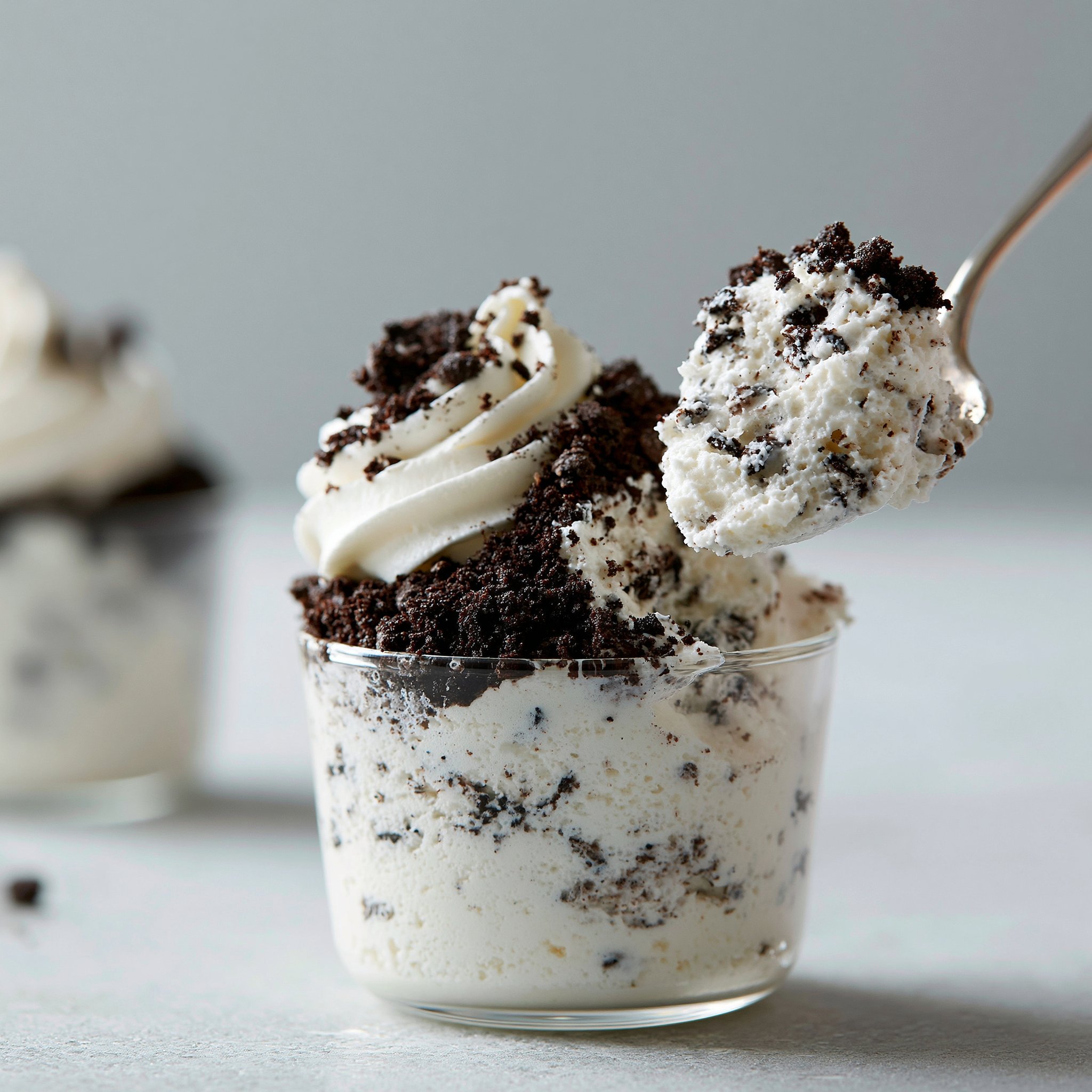
Serve it well-chilled so the mousse feels thick and creamy on the spoon. I love portioning it into clear glasses so you can see the Oreo flecks, and a small spoon really suits the rich, airy texture. If you’re hosting, you can portion everything ahead and keep the cups cold until you’re ready—just remember the cookie bits will soften a touch as they sit, which is part of the charm.
For details on how reader information is handled around site features, the privacy policy is available if you’d like to review it.
How to Store It
Keep Oreo mousse covered in the refrigerator so it stays thick and fresh-tasting. It’s at its best after it’s had the full chill time (at least 2 hours), and it holds well for a make-ahead dessert—just know the Oreos will gradually soften the longer it sits. If you’re making it in advance for an event, portioning into cups and covering each one helps prevent fridge odors and keeps the top from drying out.
If you like to review the fine print for using recipes and site content, you can take a look at the terms and conditions.
Final Thoughts
If you’re craving a dessert that’s creamy, light, and unmistakably cookies-and-cream (with that satisfying speckled look), this Oreo mousse delivers with very little effort—just whip, fold, and chill until it’s perfectly spoonable.
Conclusion
If you want to compare a few approaches to Oreo mousse, you might enjoy this quick and easy Oreo mousse recipe, this three-ingredient Oreo mousse version, or this gluten-free Oreo mousse adaptation to see how small method tweaks change the final texture.