There’s something wildly satisfying about a homemade oatmeal cream pie that’s still a little soft in the center, with edges that are just set—and a thick, vanilla-scented filling that stays plush instead of melting away. These are the kind of cookies you can feel under your fingertips: tender from the butter, gently spiced with cinnamon, and textured with quick oats in every bite.
I make this version when I want that classic sandwich-cookie comfort but with fresher flavor and better texture control (no dry cookies, no gritty filling). If you’re new around here, you can get a feel for my baking style on the about Citrus and Crave page—I’m big on clear cues and dependable results.
Why You’ll Love This Recipe
- The cookies bake up soft-centered with set edges—perfect for sandwiching without cracking.
- Brown sugar + a spoonful of molasses gives a deep caramel note that plain sugar can’t.
- Quick oats distribute evenly, so every bite has that cozy oat texture without turning tough.
- The filling is a true butter-and-cream-cheese style: thick, smooth, and lightly tangy to balance the sweetness.
- You can adjust the filling thickness easily with a small splash of cream if needed.
- These store well in the fridge, which actually makes the sandwiches feel even more cohesive and bakery-like the next day.
The Story Behind This Recipe
I wanted an oatmeal cream pie that tasted like real butter and vanilla—not just sweetness—so I leaned on brown sugar, molasses, and cinnamon for warmth, then kept the bake time short so the centers stay soft once the cookies cool and get filled.
What It Tastes Like
The cookies are gently spiced and caramel-forward, with that unmistakable molasses aroma as they bake; the quick oats add a cozy chew without feeling heavy. The filling is rich and creamy—vanilla-first, with a subtle tang from the cream cheese—so the whole sandwich lands sweet but not flat, soft but not squishy.
Ingredients You’ll Need
A few ingredients do the heavy lifting here: softened butter helps you whip in air for a lighter cookie, brown sugar and molasses bring that deep “oatmeal cookie” flavor, and quick oats give structure and chew. For the filling, brick-style cream cheese is key for a thick, smooth texture (spreadable, not runny). If your filling ends up too stiff, a small splash of cream loosens it without changing the flavor much. For more on how this site handles reader data while you browse and cook, you can review the privacy policy.
- 1 cup unsalted butter (softened)
- 1 cup brown sugar (packed)
- 1/2 cup granulated sugar
- 1 tablespoon molasses
- 2 teaspoons vanilla extract
- 2 large eggs
- 2 cups all-purpose flour
- 1/2 teaspoon cinnamon
- 1 teaspoon baking soda
- 1/4 teaspoon salt
- 3 cups quick oats
- 3/4 cup unsalted butter (softened) for filling
- 2 ounces cream cheese (full-fat, brick style)
- 3-4 cups powdered sugar
- 1 teaspoon vanilla extract for filling
- 1/4 teaspoon salt for filling
- 1 tablespoon cream (if needed)
How to Make Homemade Oatmeal Cream Pies
- Heat the oven. Preheat your oven to 350°F (175°C). Line baking sheets if you like easier cleanup (these cookies are buttery).
- Cream the butter and sugars. In a large bowl, beat the softened butter with the brown sugar and granulated sugar until it looks lighter in color and fluffy—not greasy. This takes a few minutes and sets you up for a softer cookie.
- Add molasses and vanilla. Mix in the molasses and vanilla extract until fully blended. The batter should look silky and smell warmly caramel-like.
- Beat in the eggs. Add the eggs and beat until the mixture looks glossy and cohesive. If it looks slightly curdled at first, keep mixing—it should come together.
- Mix in the dry ingredients (gently). Add the flour, cinnamon, baking soda, and salt. Mix just until you stop seeing dry streaks. Don’t overmix or the cookies can bake up tougher than you want.
- Fold in the oats. Fold in the quick oats until evenly distributed. The dough will be thick and scoopable.
- Scoop and bake. Scoop the dough into even portions on baking sheets, leaving space for spreading. Bake for 10–12 minutes, until the edges are set but the centers still look soft. You’re not looking for deep browning—set edges are your “done” cue.
- Cool completely. Let the cookies cool fully before filling. If they’re even slightly warm, the filling will slide and melt.
- Make the filling. Beat the softened butter and cream cheese until completely smooth, with no lumps. Gradually add the powdered sugar, vanilla, and salt, mixing until thick, creamy, and spreadable.
- Adjust if needed. If the filling feels too thick to spread cleanly, add a little cream (a small splash at a time) until it loosens just enough to glide.
- Assemble. Pair cookies by size. Spread a generous layer of filling on the flat side of one cookie, then top with another to make a sandwich.
- Chill for best texture. Store the assembled cookies in an airtight container in the refrigerator so the filling firms slightly and the sandwiches hold together neatly.
Tips for Best Results
- Use truly softened butter. If your butter is cool and firm, the sugar won’t cream in properly and the cookies won’t get that lighter, fluffier texture.
- Pull them when the centers look underdone. At 10–12 minutes, the edges should be set while the middle still looks soft; they’ll finish setting as they cool.
- Match cookie pairs before you frost. A quick “size match” makes the sandwiches look tidy and helps keep the filling evenly distributed.
- Beat the filling until ultra-smooth before adding lots of sugar. Getting the butter and cream cheese fully smooth first prevents little cream cheese bits from hanging around.
- If the filling is too stiff, loosen carefully. Add only a little cream at a time; you want spreadable and thick, not soft enough to squish out the sides.
If you’re baking on this site, I also keep expectations and kitchen-safety notes transparent in the recipe disclaimer.
Variations and Substitutions
- More or less powdered sugar: Use 3 cups for a slightly softer, less-sweet filling; go up to 4 cups for a firmer, more structured filling that pipes/spreads thickly.
- Thicker cookie sandwiches: Scoop slightly larger portions and bake toward the longer end of the time range, watching closely for set edges (don’t bake until fully firm).
For site-use details while you browse recipes, you can also review the terms and conditions.
How to Serve It
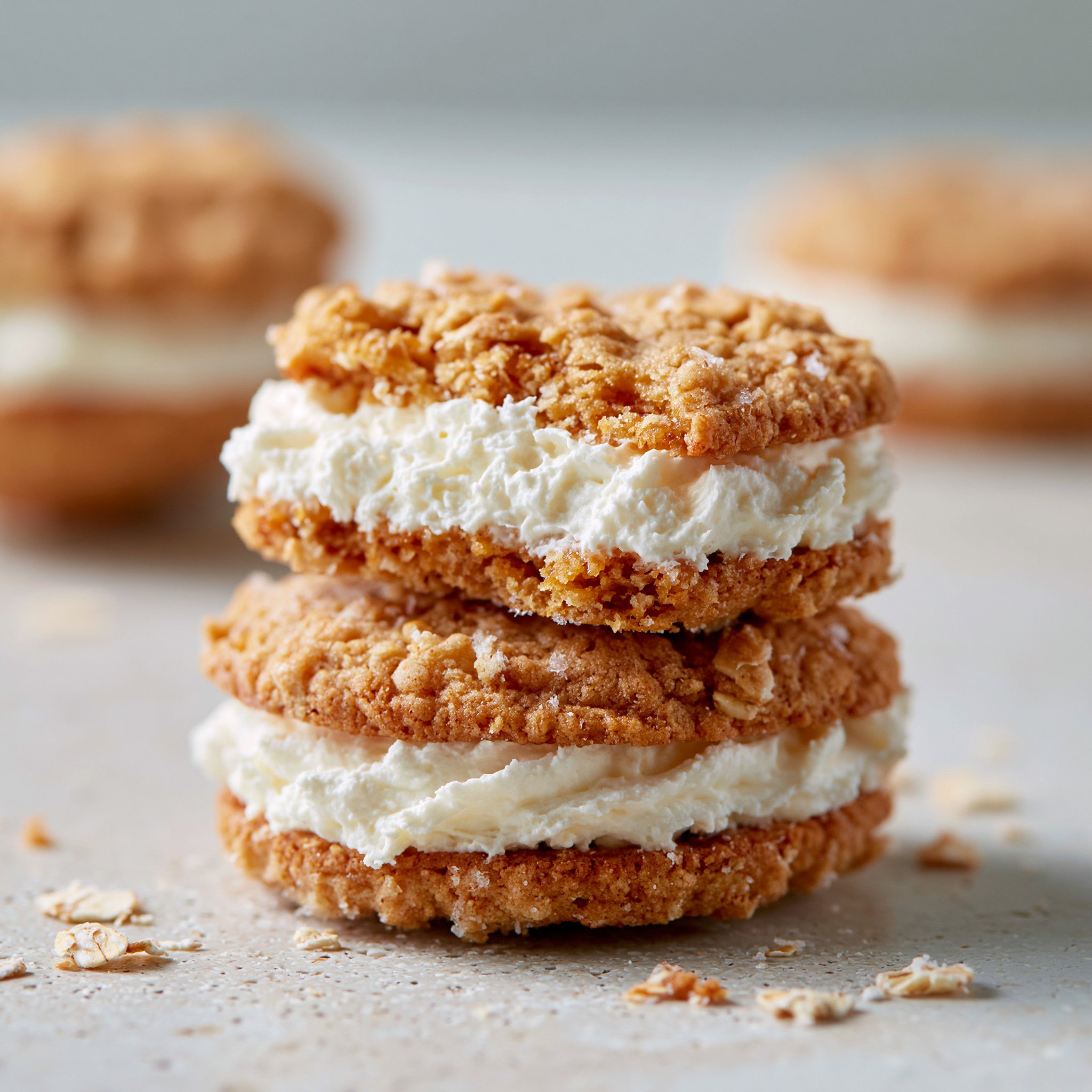
Serve these chilled for clean slices and neat bites, or let them sit out for 10–15 minutes if you prefer a softer, more cake-like sandwich texture. I love them alongside coffee or black tea—the gentle bitterness makes the molasses and vanilla pop. For a simple platter, stack them in a slightly overlapping line so you can see the creamy filling peeking out.
How to Store It
Because the filling includes cream cheese, keep the assembled oatmeal cream pies in an airtight container in the refrigerator. They actually get better after a few hours as the cookies and filling settle into each other. If you’re browsing with cookies enabled on the site, you can read more in the cookie policy.
Final Thoughts
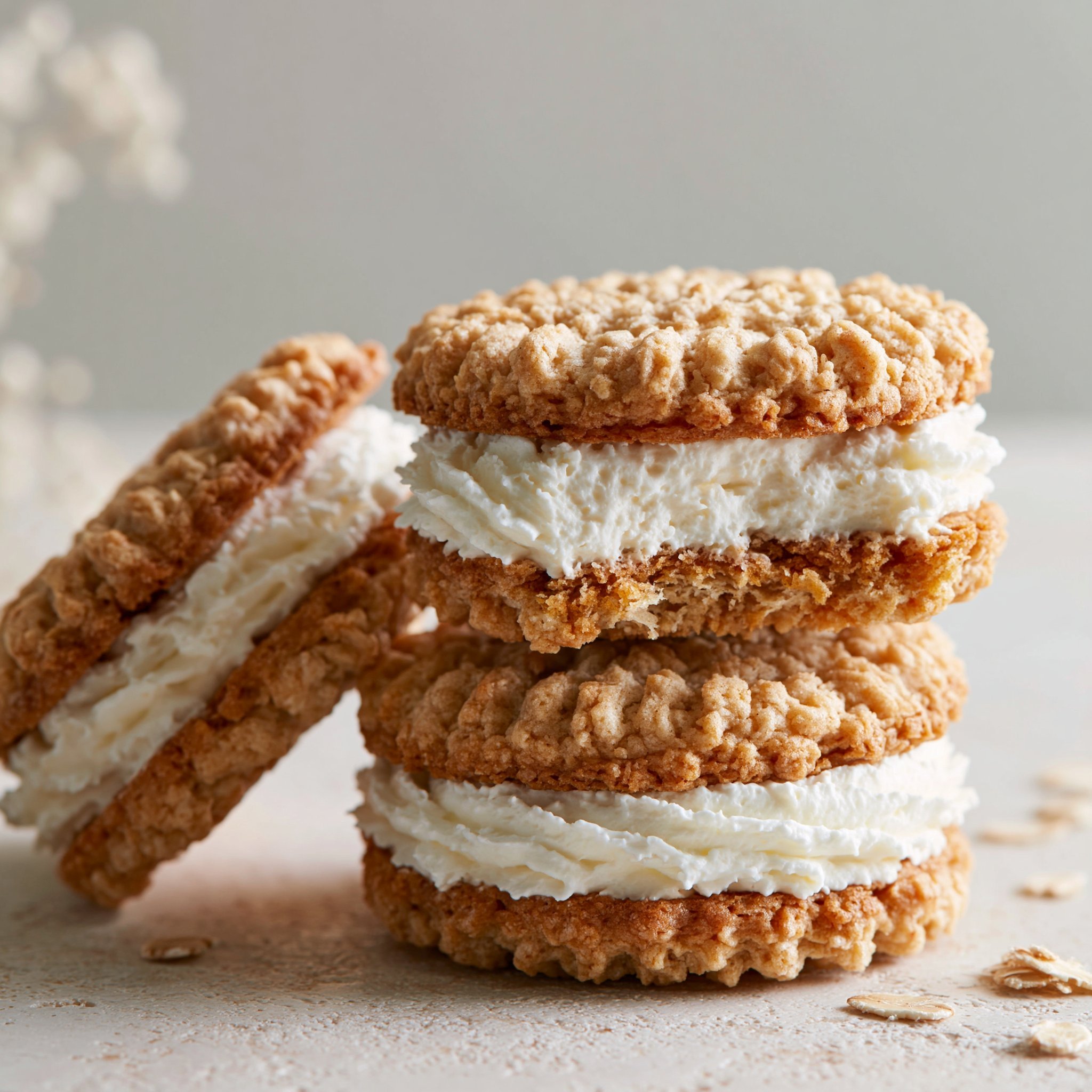
These homemade oatmeal cream pies hit that sweet spot: soft oat cookies with warm molasses flavor, plus a thick vanilla filling that stays creamy and smooth. Take your time with the creaming step and don’t overbake—those two details make the difference between “good” and the kind you’ll want to stash in the fridge for little grab-and-go treats.
Conclusion
If you want to compare a few other approaches to this classic sandwich cookie, you can check out My Baking Addiction’s homemade oatmeal cream pies, Sally’s Baking Addiction oatmeal creme pies, and Sprinkle Bakes’ homemade oatmeal cream pies to see how different fillings and cookie textures stack up.